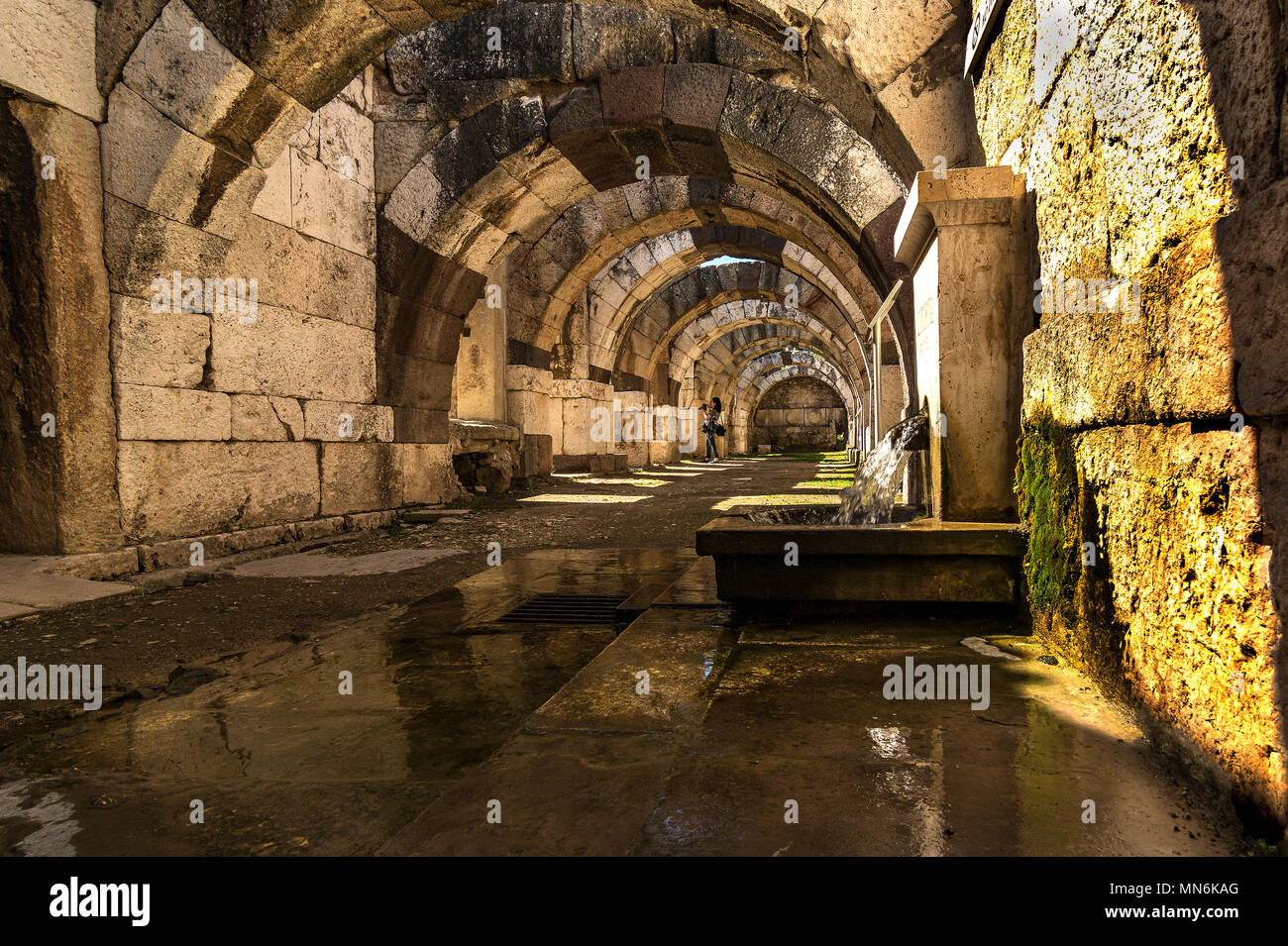
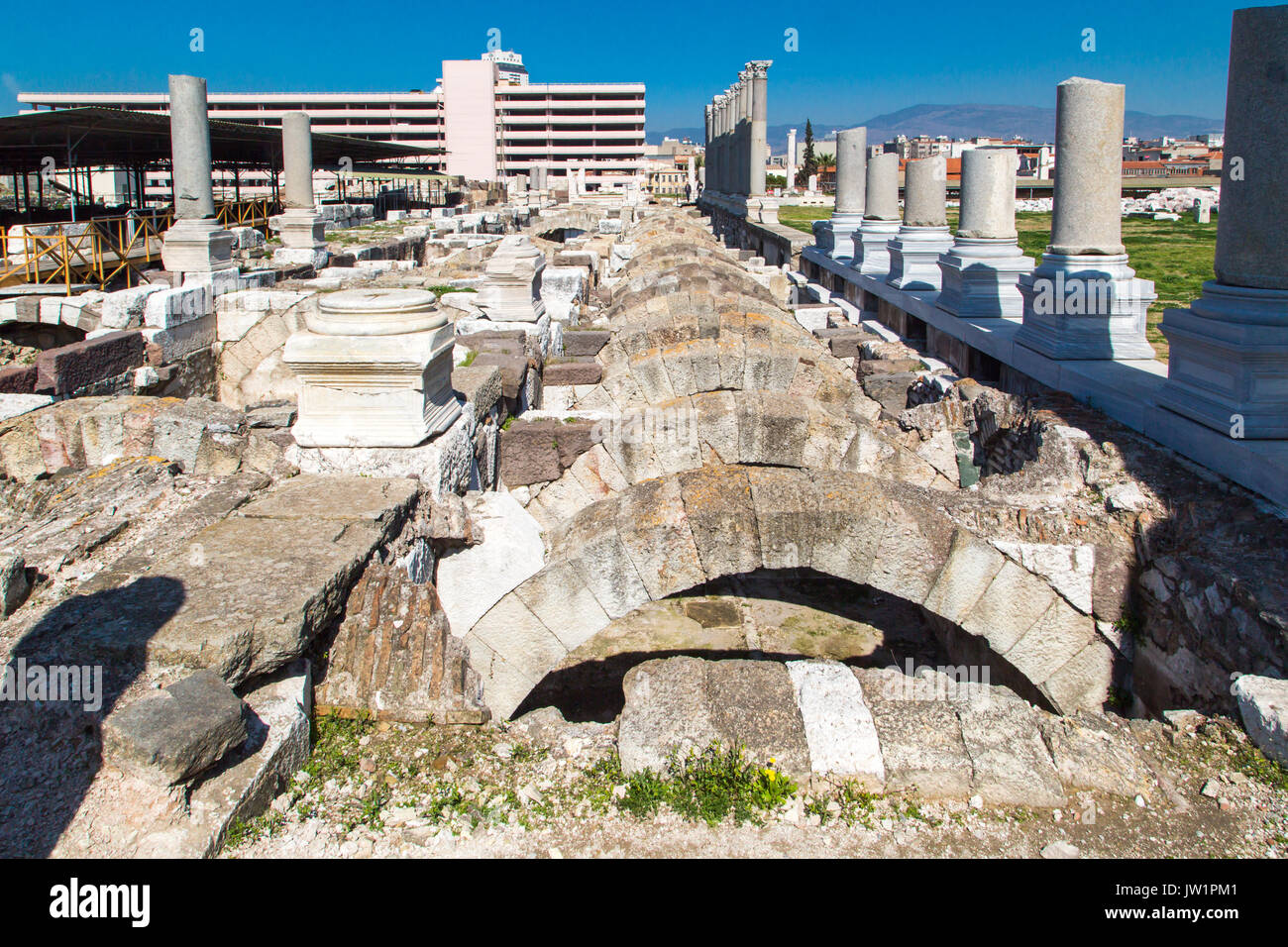
The Agora of Smyrna, alternatively known as the Agora of İzmir (Turkish: İzmir Agorası), is an ancient Roman agora located in Smyrna (present-day İzmir, Turkey). Originally built by the Greeks in the 4th century BC, the agora was ruined by an earthquake in 178 AD. Roman Emperor Marcus Aurelius ordered its reconstruction. Excavations started in 1933. In 2020, the Agora of Smyrna became a Tentative World Heritage Site as part of "The Historical Port City of Izmir."
Buildings and structures of the agora
- Faustina Gate
- Ancient Street
- North Stoa (Basilica)
- West Stoa
- Graffiti
- Corinthian colonnade
- Ottoman-era Muslim graveyard
- House of Sabbatai Zevi
Recent Discoveries and Features
Recent excavations at the Agora of Smyrna have revealed several noteworthy features:
- A functional 2,000-year-old water trench, highlighting the advanced engineering of the period.
- Graffiti on the basilica wall, believed to be the world's first crossword.
- Evidence suggesting coexistence among Muslims, Christians, and Jews, as indicated by candles featuring the Star of David.
- Ongoing excavations are currently focused on Ottoman-era graveyards.
[Source: [Daily Sabah](https://www.dailysabah.com/history/2016/10/31/smyrna-agora-a-historical-and-architectural-treasure)]
References
External links
Media related to Agora of Smyrna at Wikimedia Commons